
Artificial intelligence (AI) is rapidly turning the business landscape upside down, offering unprecedented opportunities for innovation and growth as well as beginning a highly competitive era. From automating routine tasks to providing valuable insights, the role of artificial intelligence in business is as diverse as it can be. As the majority of companies embrace AI, it is crucial to understand its potential benefits and challenges to navigate this transformative technology effectively.
What is artificial intelligence in business?
Artificial intelligence in business refers to the integration of AI technologies into various processes to solve problems and improve operations. It involves the development and deployment of various systems and infrastructures that combine data and human knowledge to perform tasks typically such as data collection, identifying errors, analysis, and problem-solving.
To put it simply, it is the process of making use of intelligent machines and programs to replicate the critical thinking skills of human workers. By leveraging AI, businesses can gain a competitive advantage, improve efficiency, and enhance customer satisfaction.

Learn about the basic concepts of AI in business
With that said, the term AI is being thrown around with little to no discretion recently. If you are looking to leverage these technologies, it is important to know what exactly it is about. And here are the major terms in the AI category:
Machine learning algorithms
These algorithms are the foundation of AI, enabling systems to learn from data and improve their performance over time. They can also be used to recognize patterns, point out defects, and make informed predictions. On top of that, they are tailor made for large datasets, allowing businesses to recognize usable insights from copious amounts of data.
Deep learning
This is machine learning at its best, utilizing artificial intelligence with multiple layers to process and learn complex patterns in data, paving the way for fully automated tools and programs with no need for human intervention. Some notable elements that benefit from deep learning are chatbots and virtual assistants.
Natural language processing (NLP)
NLP is the next step in the AI evolution. It focuses on the ability of computers and programs to understand and generate human language in the form of both text and speech. NLP techniques enable computers to understand, interpret, and generate human language, including text and speech. NLP applications have weaved their way into various aspects of our daily lives, most notably machine translation, chatbots, GPS, and more.
Computer vision
Taking things up a notch, AI has also evolved to the point where they can recognize and extract data from visual elements. This is bound to happen as many people consume visualized content nowadays, especially on the Internet. As a result, computer vision has found a place in many industries like manufacturing, marketing, and a lot more.
How to implement artificial intelligence in business processes
The AI integration process will differ depending on what you intend to use these technologies for. However, there are some key steps that you should always adhere to:
Learn about what AI can and cannot do for your business
Before embarking on an AI implementation journey, it is crucial to understand the capabilities and limitations of the technology. Many businesses are compelled to join the race without a firm understanding just to avoid falling behind. However, it is the AI-related insights that can propel you forward.
First, research different AI applications and explore how they can address specific business challenges. Consider factors such as the type of data required, the complexity of the problem, and the potential benefits and risks involved. Aside from that, look into the existing use cases of AI in your industry to determine whether they are viable for you.
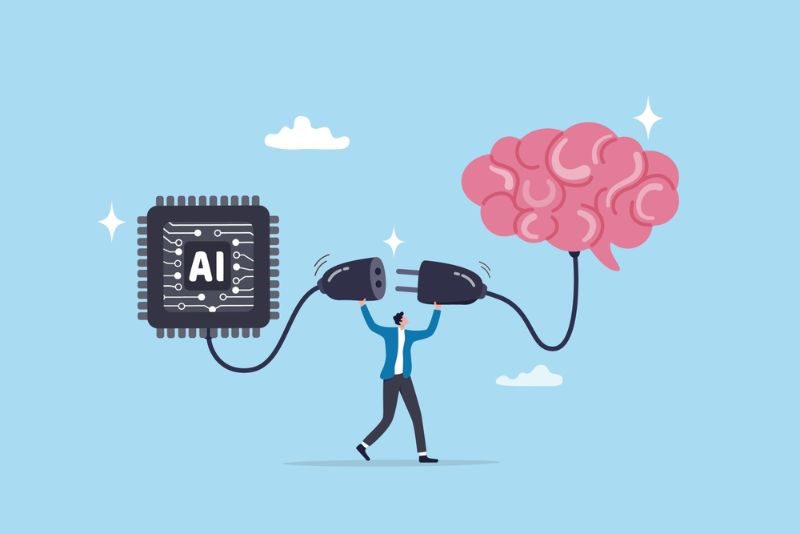
Understand the capabilities and limitations of artificial intelligence in business
Subsequently, you will need to delve into the specific utilities of AI. From facilitating automation to enhancing cybersecurity, you need to know what the technology does for you. Armed with that knowledge, you can move on to choosing the right AI models as each is specifically created to a collection of use cases.
Finally, to close out the preparation stages, you need to address one of the major conceptions surrounding AI: the lack of human assistance required. This technology comes with various creative and ethical issues that make it impossible for you to go without monitoring.
Strategically define AI implementation goals
Once you have a clear understanding of artificial intelligence for businesses, set specific and measurable goals for your implementation. Align these goals with your overall business strategy and ensure they are achievable within your resources and timeline.
Begin by outlining what you want to achieve with AI, such as improving efficiency, enhancing customer satisfaction, or driving revenue growth. This can be achieved by recognizing specific pain points in your operation.
The following step involves aligning goals with business strategy and ensuring your AI goals are consistent with your company’s overall direction. To enhance your ROI when investing in AI technology, make sure to conduct comprehensive analysis about both your internal processes and AI frameworks.
Lastly, set measurable KPIs, or in other words, choose the right metrics to track the success of your AI implementation. Make sure that they are viable and realistic and the key is to prioritize the AI applications that directly benefit your pain points before anything else.
Evaluate your AI readiness
Before officially beginning, you will also need to evaluate if your business is ready for AI integration to ensure a smooth integration process. Factors to focus on include:
Data readiness: Evaluate the quality, quantity, and accessibility of your data. Ensure you have the necessary data infrastructure to support AI applications.
Technical expertise: Assess your team’s skills and knowledge in data science, machine learning, and AI. Consider hiring, training new talent, or outsource AI applications if needed.
Fund and infrastructure availability: Last but not least, make sure that your business is well-equipped for the process. Artificial intelligence for business requires computing, data storage, and a whole lot of investment, so it is vital that you are well prepared before taking on these technologies.

Your infrastructure is influential for the integration process
AI Integration
The integration of AI into your business involves several key steps:
- Prepare your data: Clean, preprocess, and structure your data so they are ready for AI algorithms.
- Deploy and test: Implement the AI solution in your business environment and thoroughly test its performance.
- Iterate and refine: Continuously monitor and evaluate the AI’s performance and make adjustments as needed.
Enhance your strategy
As you integrate AI into your business, keeping a close eye on the systems to continuously evaluate and refine your strategy is absolutely necessary. Stay updated on AI advancements, explore new use cases, and adapt to changing business needs.
How can you do so? Establish frameworks and internal data ecosystems to facilitate the monitoring process. On top of that, artificial intelligence in business requires considerable collaboration between your internal specialists and external experts, so it is also necessary to encourage more collaborative efforts in applying these AI technologies.
Last but not least, always look ahead when you are working with AI. The idea behind these technologies is simplifying your work with the assistance of automation, so it can find a place in many of your internal processes. It is wise to begin with the most pressing areas of your business, but in time, you should consider expanding the systems to encompass more aspects.
Also, just in case AI systems have not worked their magic in time for you, you should have a plan in place. Establish your infrastructures with flexibility in mind so you can always pivot when the situation calls for it.
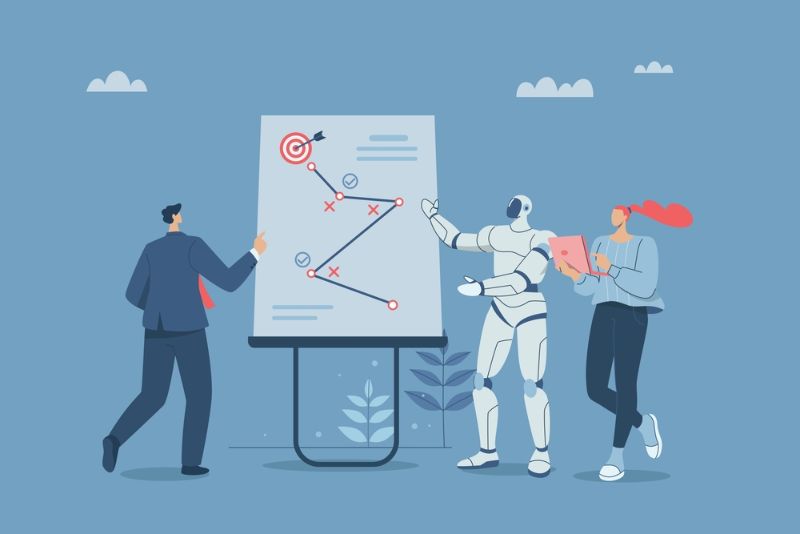
Devise a comprehensive strategy for bringing AI into your operation
FAQs about artificial intelligence in business
There are many questions surrounding the use of artificial intelligence in business, and these are two of the most common ones:
Can you use AI technologies for starting a business?
Yes, but not on their own. Artificial intelligence can assist you in coming up with business ideas, devising business plans, and informing entrepreneurs in the key steps in starting a business. On top of that, they will also simplify tasks like coding a website, writing emails, and scheduling meetings to save valuable time for entrepreneurs.
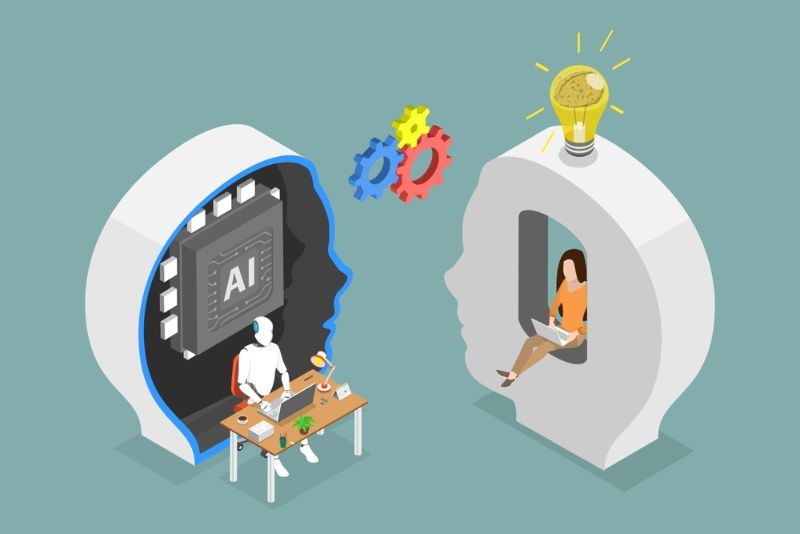
AI integration can work wonders for your business
Will AI replace human workforce in the future?
This is a very common opinion in all industries, but is it true? Analysis of the impact of AI on the workforce holds mixed predictions for the future.
Surveys have shown that nearly 40% of global employment is exposed to AI. However, whether the technology complements or negatively impacts current jobs depends on their experience. We know that AI integration requires human monitoring and they are made with the purpose of working in tandem with the human workforce. With proper training, it is possible for humans to work alongside AI technology in the foreseeable future.
BytePilot is your trustworthy partner for all things AI
In case you are looking for a competent and innovative AI solutions provider, BytePilot is ready to provide our comprehensive services. Our team of highly trained professionals can assist entrepreneurs and companies in figuring out their pain points and how to address them using artificial intelligence in business. Contact us today and begin your journey towards automation.
Artificial intelligence in business is a revolutionizing development, offering unprecedented opportunities for growth and innovation. Learning about its concepts and how to implement it properly into your operation can help your businesses improve efficiency, enhance decision-making, and gain a competitive edge on the crowded market. With the help of comprehensive AI solutions from BytePilot, you can leverage these innovative technologies effectively.